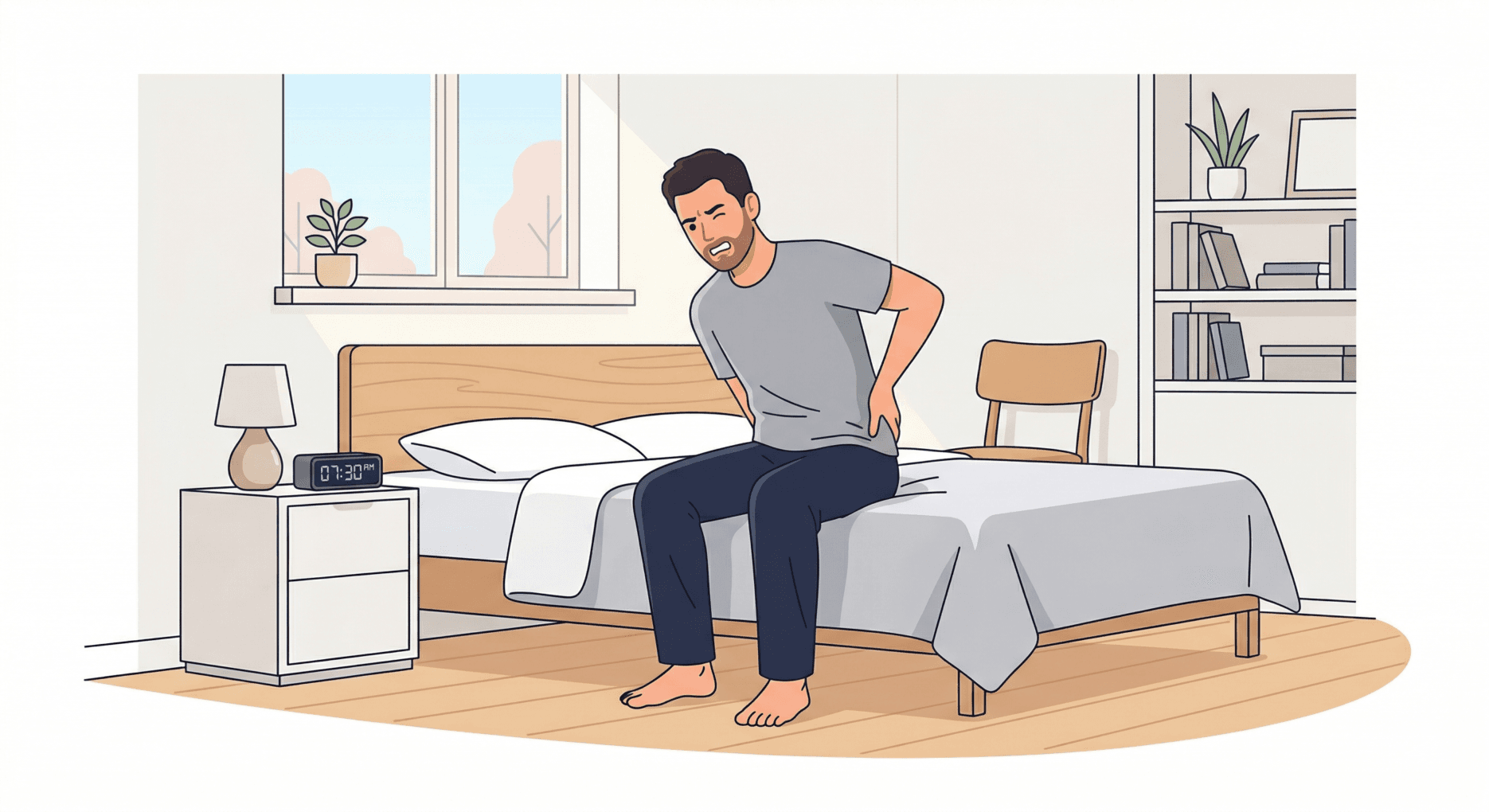
In the era of social media, you may come across some reels depicting people in their late 20s and early 30s suffering back pain and stiff joints. While these reels are meant to poke fun at their age, ageing is a biological process that happens to everyone regardless of race, ethnicity, and cultural background.
So why do we grow old? Why do these symptoms appear? And perhaps the most important question: Can we slow down, or even prevent, ageing? Welcome to my very first article of an ongoing series about ageing.
Our cells have a limited amount of replication
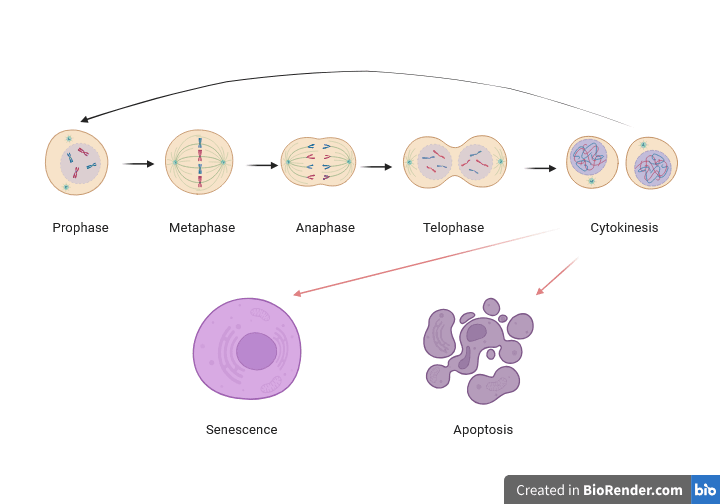
If you remember your biology lesson from secondary school, you may have learnt that cells replicate for growth, repair, development, and reproduction. If you pay attention in class, then you may know cells replicate via mitosis (There is another process known as meiosis, but we will not mention it here). However, most of the cells in our body can only divide up to a certain number of times. After hitting the limit, our cell will stop dividing. This process is known as senescence. Meanwhile, some cells will trigger their programmed cell death. This is known as apoptosis. You can read the detailed definition below:
Senescence – The process of growing old. In biology, senescence is a process by which a cell ages and permanently stops dividing but does not die.Senescence may play a role in the development of cancer and other diseases. (National Cancer Institute)
Apoptosis – A type of cell death in which a series of molecular steps in a cell lead to its death. This is one method the body uses to get rid of unneeded or abnormal cells.Also called programmed cell death. (National Cancer Institute)
Figure 1 illustrates both senescence and apoptosis.
Why does it matter to understand the ageing process?
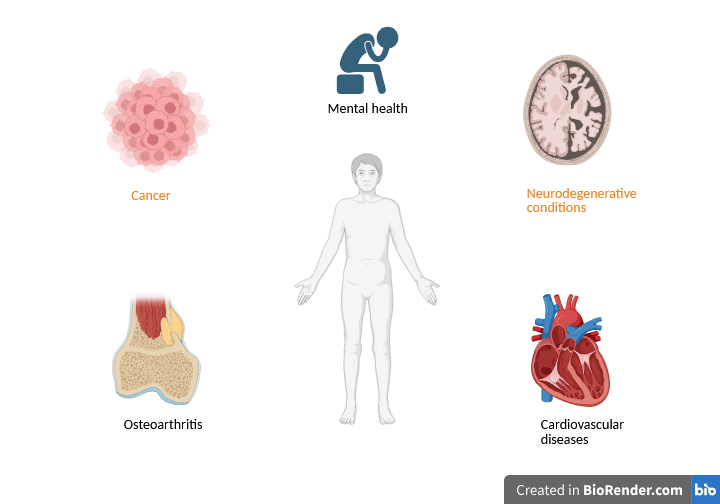
As we grow older, our cells will accumulate more damage over time, such as UV sunlight, environmental pollutants and much more. These damages may result in mutation in our cells. Thus, as we age, our body will start showing symptoms and if left untreated, diseases may manifest within our bodies. The common diseases that are found in elderly patients are, but not limited to, cancer, neurodegenerative diseases (such as Alzheimer’s disease or Parkinson’s disease), bone diseases (such as osteoporosis), and many others. Figure 2 shows the common age-related diseases.
Our life expectancy has increased tremendously, thanks to the advancement of medical treatments. Ironically, longer life expectancy also results in higher chances of contracting these ageing-related diseases. In fact, some scientists argue that these diseases are consequences of our prolonged life, which we will discuss in the next article.
Extended lifespan does not mean better health span. What is the difference between lifespan and healthspan? Lifespan is the total number of years a person lives, while healthspan is the total number of years a person lives in a good condition, free of major diseases.
My goal for writing these articles is to educate non-science readers to understand the ageing process, and how to extend our healthspan and lifespan. It is also an opportunity for me to venture back into science since I have a science background, specifically biology and biotechnology.
The Disclaimer: This article is for informational and educational purposes only and does not constitute medical advice. Always consult with a healthcare professional regarding any medical concerns or before making changes to your health regimen.
Attributions & Ownership * Text & Data Visualization: All written content and scientific diagrams (Figure 1 and Figure 2) were authored and designed by the creator of this series.
- Illustrations: The introductory cover illustration was generated with the assistance of Gemini AI.