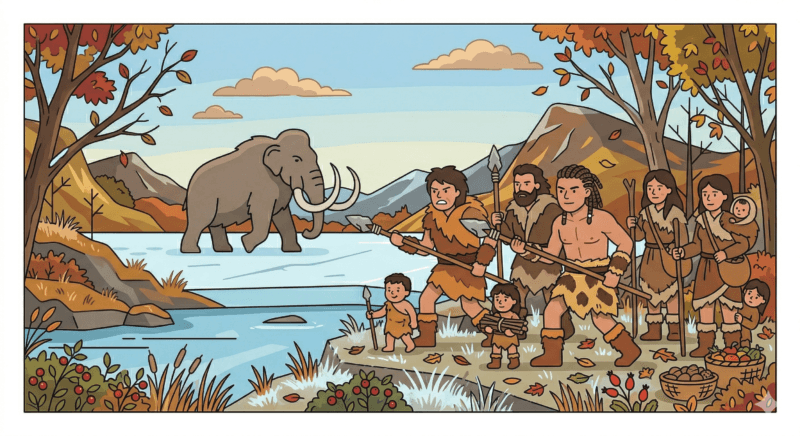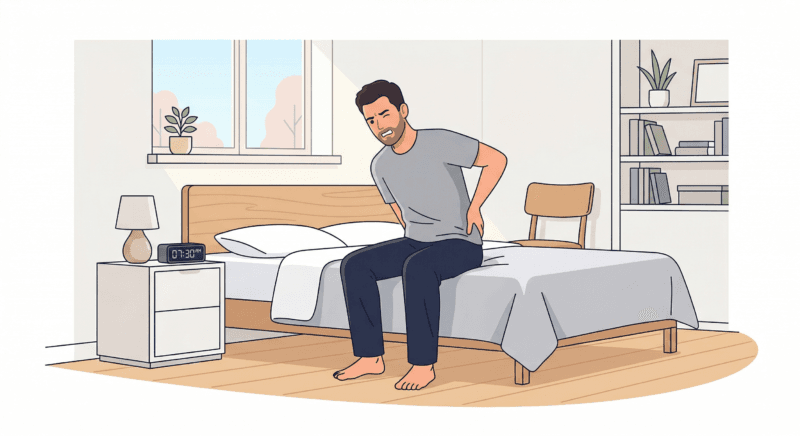

From the last article, we know that the environment has major effects on our bodies, and how our bodies are not programmed for the modern world. Let’s dive deeper into this topic by providing you with these two ideas: “The Disposable Soma Theory” and “Antagonistic Pleiotropy”, which may explain the occurrence of these ageing diseases.
There is always a trade off
I am sure you have been through this scenario many times.
You wanted to live a healthy life, so you began your day by waking up in the early morning to go exercising. Then you come home and cook all your meals for the day before heading off for work. After finishing work, you went home and read a book before going to bed.
This is a very healthy lifestyle, but do you think you will live like this everyday? Sometimes you may want to sleep in, or you may want to visit your parents during the weekend, thus you stop your workout and self prep meals. Maybe you just want to have some good times with your friends so you decide to have some delicious, but unhealthy food.
Since we have a finite amount of energy and time, if you choose to do one thing, you cannot afford to do the others. Therefore, you need to choose your opportunity cost wisely. There is always a trade off.
The trade off reflects “The Disposable Soma Theory”. Professor Thomas Kirkwood proposed that ageing is an issue of resource allocation. From a biological perspective, the reason we exist on this planet is to reproduce and ensure the survival of our genes. Our energy is invested into the three main factors: growth, repair and reproduction. However, energy is finite, and it must be distributed accordingly.
Since the main purpose for our existence is reproduction, the reproduction factor is maintained at a high level. Some of you may think: “Why won’t our bodies invest more into repairing and maintenance?”. It is actually a disadvantage for the body to invest in perfect repair. In nature, it is often better to be “good enough” than be “perfect”. Since everyone is going to die one day regardless, it is better to have high quality offsprings than perfect repairs. The downside of this outcome is the emergence of ageing diseases.
Nothing lasts forever
While The Disposable Soma Theory suggests that limited energy must be carefully diverted into growth, repair and reproduction, Antagonistic Pleiotropy, proposed by Professor George Williams, explains that our genes can display multiple positive or negative traits in our lifetimes, and evolution had selected genes that enable us to survive and reproduce, even if the selected genes exhibit negative effects in later life.
Let’s come up with a scenario. You bought a new phone that has the best software; it can run applications faster than any other phones in the market. The trade off is it may damage your hardware faster, and consume more electricity. For the first few years, you are thoroughly enjoying your phone because it works flawlessly. However, after 5 years, you notice that your phone’s hardware is starting to take its toll; faster battery drain, the rising temperature, the noticeable lag while using the phone. You then send the phone for maintenance, and everything seems okay, but the more you use your phone, the worse it becomes even with multiple maintenance. The software that boosts your productivity, now becomes liable to the phone’s hardware.
P53, APOE4 and the evolution of our brain
To further illustrate the “Longevity Paradox”, in the next article, we will look closely at these 3 factors that contribute to growth and repair in the human body, but display negative traits in later life.
P53 gene is a common tumor suppressive gene that is responsible for preventing cancers in early life, but it affects tissue regeneration negatively in later life. APOE4 gene is known for boosting our immune system via inflammation. Additionally, we have the largest brain in the animal kingdom, which allows us to create tools and to have better thinking and memories, but the cost of these two factors are dementia and brain-related diseases in later life.
Sources:
Patterson, E. J., Bounds, A. D., Wagner, S. K., Kadri-Langford, R., Taylor, R., & Daly, D. (2024). Oculomics: A Crusade Against the Four Horsemen of Chronic Disease. Ophthalmology and Therapy. https://doi.org/10.1007/s40123-024-00942-x
Voskarides, K., & Giannopoulou, N. (2023). The Role of TP53 in Adaptation and Evolution. Cells, 12(3), 512. https://doi.org/10.3390/cells12030512
Ungewitter, E., & Scrable, H. (2009). Antagonistic pleiotropy and p53. Mechanisms of Ageing and Development, 130(1-2), 10–17. https://doi.org/10.1016/j.mad.2008.06.002
The Disclaimer: This article is for informational and educational purposes only and does not constitute medical advice. Always consult with a healthcare professional regarding any medical concerns or before making changes to your health regimen.
Attributions & Ownership* Text & Data Visualization:All written content was authored and designed by the creator of this series.
- Illustrations: The introductory cover illustration was generated with the assistance of Gemini AI.