
Most people assume sugar cravings come from a lack of willpower. In reality, the urge to eat sweets is strongly influenced by how sugar interacts with the brain’s reward system. The more sugar you consume, the more your brain adapts to expect it.
Interestingly, reducing sugar intake often leads to the opposite effect: cravings gradually decrease over time.
Sugar and the Brain’s Reward System
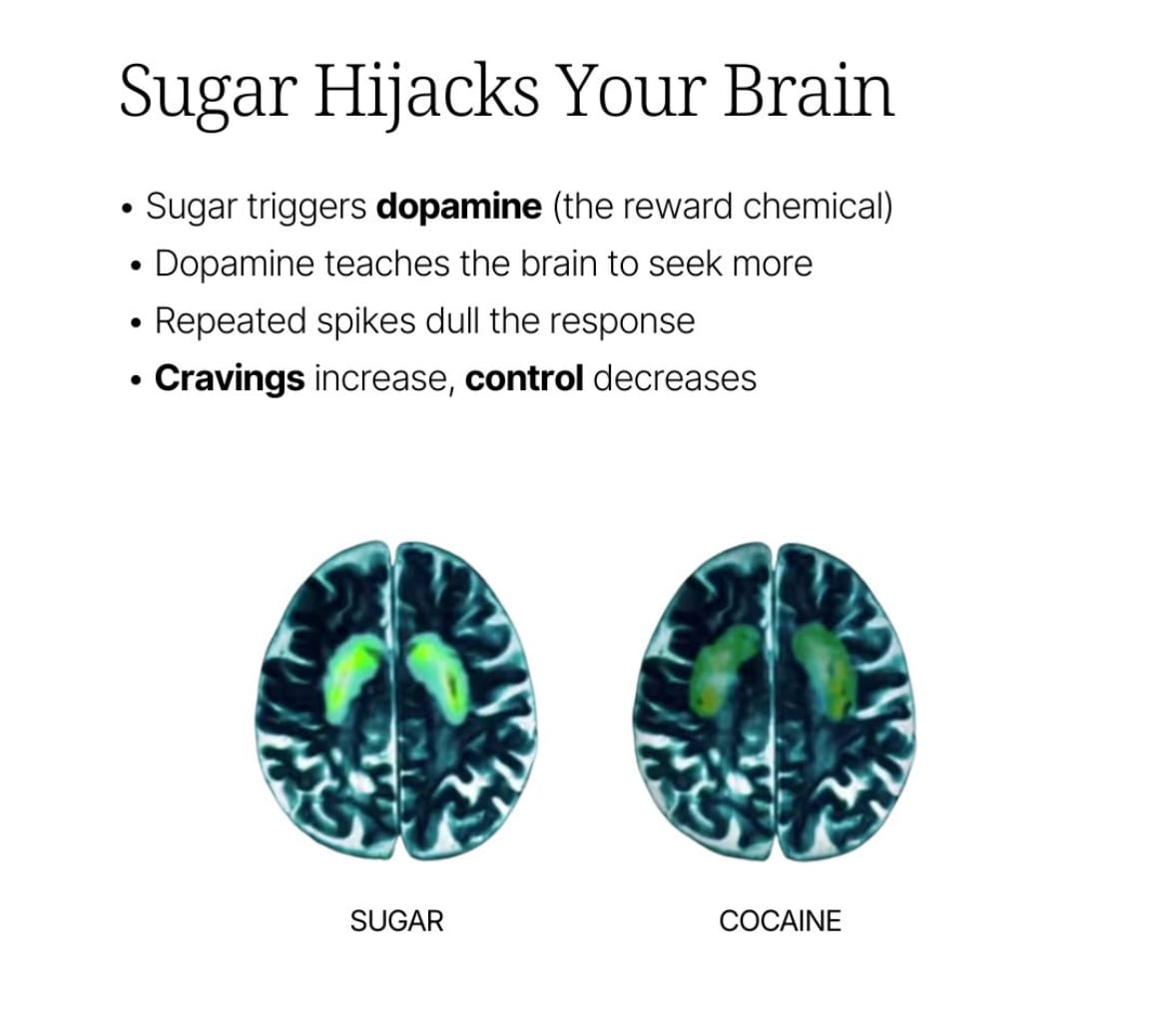
When you eat sugar, your brain releases dopamine, a neurotransmitter involved in pleasure and motivation.
Dopamine is part of the brain’s reward circuit, which helps reinforce behaviors that the brain perceives as beneficial for survival, such as eating.
Highly palatable foods, especially those high in sugar, can overstimulate this reward pathway. The brain begins to associate sugar with a strong sense of reward, encouraging repeated consumption.
Over time, frequent exposure to sugar can condition the brain to expect that reward, making sugary foods feel more desirable.
Why Eating More Sugar Can Increase Cravings
Regular consumption of sugary foods can change how sensitive the brain is to dopamine.
Some research suggests that repeated stimulation of the reward system may lead the brain to reduce dopamine receptor sensitivity. When this happens, the same amount of sugar may feel less satisfying than before.
As a result, a person may crave more sugar to achieve the same pleasurable effect, similar to how tolerance develops with other rewarding stimuli.
This is one reason why diets high in added sugar are often associated with persistent cravings.
Why Cravings Decrease When Sugar Intake Drops
When sugar intake is reduced, the brain gradually adjusts.
Without frequent stimulation from high-sugar foods, the reward system becomes less conditioned to expect intense sweetness. Over time, the brain may become more sensitive to natural levels of sweetness, such as those found in fruit.
Many people notice that after several weeks of reducing added sugar, foods that once tasted normal can begin to taste excessively sweet.
At the same time, cravings for sugary foods often become less frequent and less intense.
The Takeaway
Sugar cravings are not simply a matter of willpower. They are closely linked to how the brain’s reward system responds to repeated exposure to sugar.
Reducing added sugar intake can gradually reset this response. As the brain adapts, the desire for highly sweet foods often decreases.
In other words, the less sugar you eat, the less your brain learns to crave it.