Have you ever spent an hour comparing reviews before buying something small, like a pair of headphones or a kitchen tool? While this behavior may seem excessive, neuroscience suggests that it reflects how the brain processes uncertainty, risk, and reward.
Even minor decisions can activate complex brain networks that evaluate potential outcomes, weigh trade-offs, and attempt to minimize regret.

The Brain’s Decision-Making Network
Decision-making relies on several interconnected brain regions.
One of the most important is the prefrontal cortex, located in the front part of the brain. This region is responsible for higher-level cognitive functions such as planning, reasoning, and evaluating options.
When faced with a choice, the prefrontal cortex works to compare available information and predict which option may produce the best outcome.
Another key region is the anterior cingulate cortex, which helps detect uncertainty or conflict between competing options. When choices appear similar or when the consequences are unclear, this area becomes more active.
Together, these regions help the brain analyze available information before committing to a decision.
Why Uncertainty Drives Information Seeking
From an evolutionary perspective, gathering information before acting can be beneficial. In uncertain environments, careful evaluation may increase the chances of making a better choice.
When the brain detects uncertainty, it often triggers information-seeking behavior. This process is supported by neural circuits involved in curiosity and learning, which encourage people to search for more data before deciding.
In modern environments, this instinct can manifest as reading reviews, comparing products, or searching online for additional opinions.
However, when information is abundant—as it often is on the internet—the process can continue far longer than necessary.
The Role of Dopamine and Anticipation
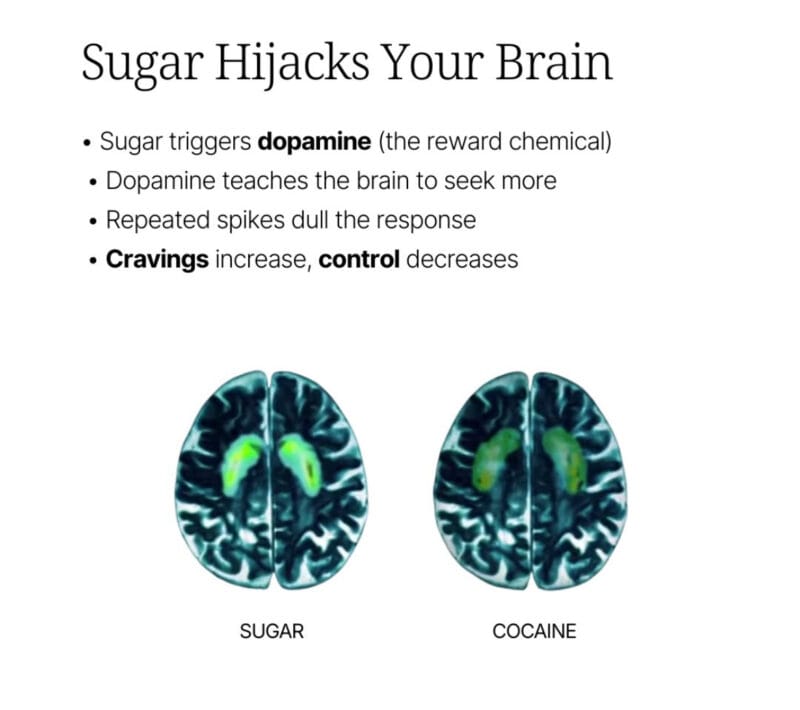
Dopamine, a neurotransmitter associated with motivation and reward, also plays a role in decision-making.
Research suggests that dopamine activity increases not only when a reward is obtained but also when the brain anticipates a potential reward or improvement.
Each new piece of information—such as discovering a better product or a better deal—can create a small sense of progress. This anticipation can encourage continued searching, even when the practical benefit becomes minimal.
As a result, the brain may remain engaged in comparison and evaluation longer than expected.
When Analysis Turns Into Decision Fatigue
While gathering information can be useful, excessive comparison may lead to decision fatigue.
Decision fatigue occurs when the brain’s cognitive resources become depleted after prolonged evaluation and choice-making. When this happens, people may experience:
- Mental exhaustion
- Difficulty choosing between options
- Reduced satisfaction with the final decision
Paradoxically, having too many options or too much information can make decisions feel more difficult rather than easier.
The Brain’s Goal: Reducing Regret
One reason people invest significant effort into small decisions is the brain’s attempt to avoid future regret.
Neuroscience studies have shown that brain regions involved in emotional processing, including the insula and orbitofrontal cortex, respond strongly to anticipated regret. When the brain imagines making the “wrong” choice, these systems can motivate additional analysis in an attempt to prevent that outcome.
This process is sometimes referred to as maximizing behavior—the desire to find the best possible option rather than a sufficiently good one.
The Takeaway
Spending long periods researching small decisions is not simply a matter of indecision. It reflects the brain’s natural tendency to evaluate uncertainty, anticipate rewards, and minimize potential regret.
While these mechanisms evolved to improve survival and decision quality, the modern world provides an overwhelming amount of information. As a result, the brain’s information-seeking systems can become overactive, leading to extended research even for minor choices.
Recognizing this tendency may help individuals strike a balance between making informed decisions and avoiding unnecessary cognitive overload.